The Ultimate Guide to Purchasing Mobile Home Insurance Online
When you buy mobile home insurance online, you can secure your property and belongings with just a few clicks. Here’s a quick rundown of what you need to know:
- Tailor-made policies: Choose coverage that fits your specific needs.
- Quick quotes: Get quotes instantly from top insurers.
- Easy comparison: Compare different policies online in minutes.
- Convenient purchase: Buy at your own pace, anytime, anywhere.
Purchasing mobile home insurance online is a quick and efficient way to protect your valuable investment and personal belongings. This type of insurance covers damages from theft, fires, and severe weather, giving you peace of mind. Whether required by lenders or mobile home communities, having a reliable insurance policy ensures you’re prepared for unexpected events without breaking the bank.
I’m Michael J. Alvarez, CPRM, CPIA, a seasoned expert in property and casualty risk management. With years of experience helping homeowners steer the complexities of buy mobile home insurance online, I’m here to guide you through the process with ease.
Buy mobile home insurance online terms to learn:
– buy cheap home insurance
– buy home insurance online
– homeowner insurance quotes
What is Mobile Home Insurance?
Mobile home insurance, also known as manufactured home insurance, is a specialized type of home insurance designed to protect your mobile or manufactured home and its contents. This type of insurance covers a range of potential risks, ensuring your home and belongings are safeguarded against unexpected events.
Coverage Overview
Mobile home insurance typically provides coverage in the following areas:
-
Dwelling Coverage: This pays to repair or replace your mobile home if it’s damaged by events like fire, wind, hail, heavy rainfall, or vandalism. It also covers attached structures, steps, tanks, and materials used in construction or repair.
-
Personal Property Coverage: This covers your personal belongings such as electronics, appliances, and furniture. If your items are damaged or stolen, this coverage helps you replace them. Common causes of damage covered include fire, theft, and accidental discharge of water.
-
Liability Coverage: This pays for legal fees and damages if someone gets injured on your property and you are found liable. For example, if a guest slips on your wet kitchen floor and gets hurt, your liability coverage could cover their medical bills and any legal costs if they decide to sue.
-
Medical Payments Coverage: This covers minor medical expenses for guests who are injured on your property, regardless of fault. It’s typically capped at a small amount, such as $5,000, to handle minor incidents and prevent lawsuits.
Why You Need It
Even though mobile home insurance is not legally required, it is highly recommended. If you have a mortgage, your lender will likely require it. Insurance provides financial protection, ensuring you won’t have to pay out of pocket for repairs or replacements if disaster strikes.
Personal Property
Your personal property includes items like clothing, electronics, and furniture. Mobile home insurance helps replace these items if they are damaged or stolen. The coverage amount for personal property is usually a percentage of your dwelling coverage, so check your policy for specific limits.
Physical Structure
The physical structure of your mobile home includes the walls, roof, and any attached structures. Dwelling coverage ensures that if your home is damaged by covered events like fire or wind, you can repair or rebuild it without bearing the full financial burden.
Liability
Liability coverage is essential for protecting yourself from legal and medical costs if someone is injured on your property. It covers both on-site and off-site injuries, providing peace of mind knowing you are financially protected against potential lawsuits.
By understanding these key aspects of mobile home insurance, you can make informed decisions when you buy mobile home insurance online. Tailoring your policy to fit your unique needs ensures comprehensive protection for your home and belongings.
Why You Need Mobile Home Insurance
Legal Requirements and Mortgage Lenders
While mobile home insurance isn’t legally required, it often becomes a necessity if you have a mortgage. Most mortgage lenders require insurance to protect their investment. Without it, you might not qualify for a mortgage or could face penalties. Even some mobile home communities mandate insurance for all residents.
Financial Protection
Accidents and natural disasters are unpredictable. Mobile home insurance provides a financial safety net. If your home is damaged by fire, severe weather, or vandalism, insurance covers the repair or replacement costs.

Without insurance, you’d have to pay out of pocket, which could be financially devastating.
Peace of Mind
Knowing that your home and belongings are protected brings peace of mind. You can live comfortably without constantly worrying about potential financial losses. Whether it’s a small accident or a major disaster, insurance ensures you’re not alone in handling the aftermath.
Personal Stories
Consider Sarah, who lives in a mobile home in Florida. Last year, a hurricane caused significant damage to her home. Thanks to her insurance, she was able to repair her home quickly without dipping into her savings. Her story isn’t unique; many homeowners find themselves in similar situations where insurance becomes a lifesaver.
By understanding these key reasons, you can see why it’s crucial to buy mobile home insurance online. It safeguards your financial future and offers peace of mind, allowing you to enjoy your home worry-free.
How to Buy Mobile Home Insurance Online
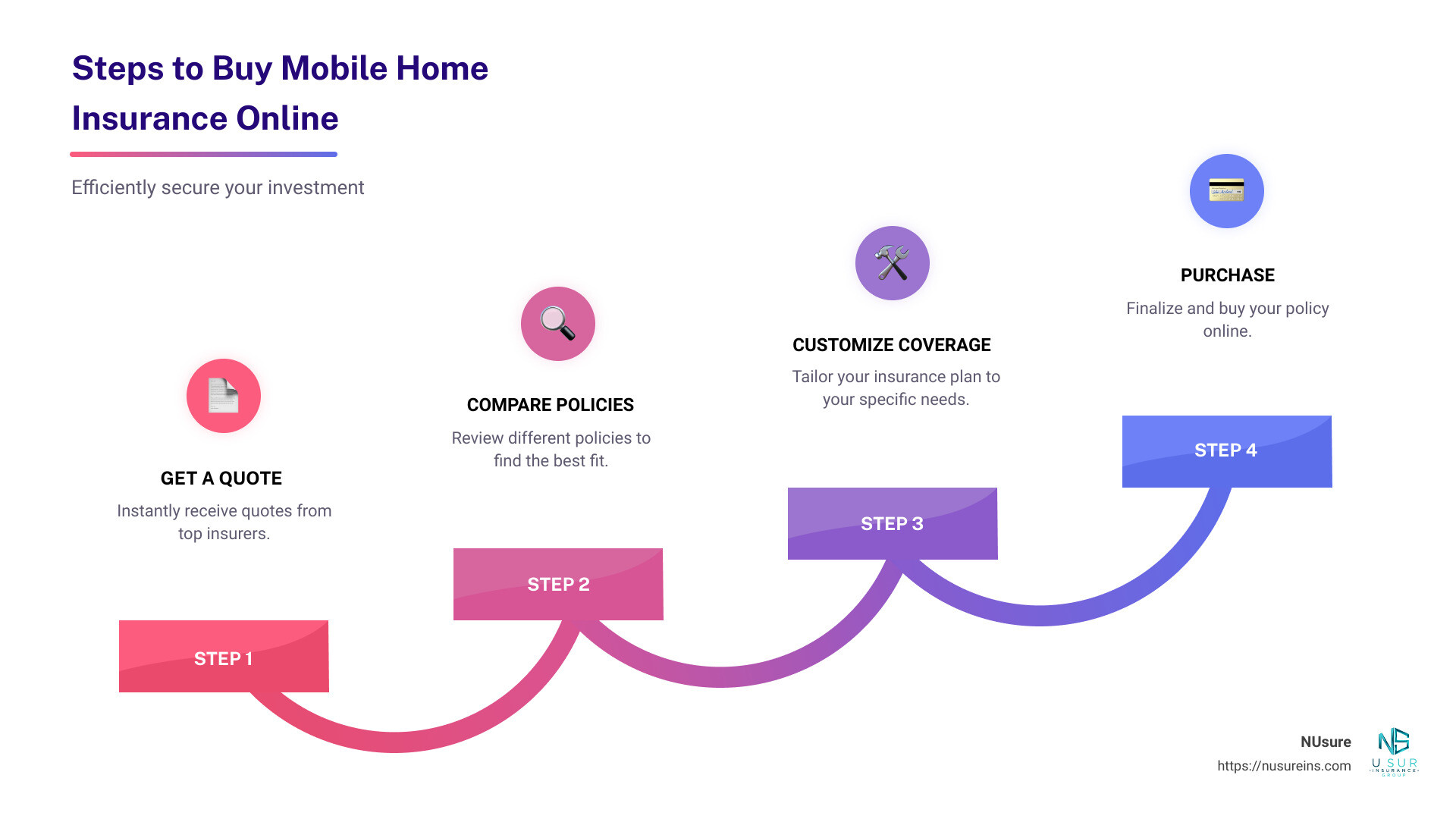
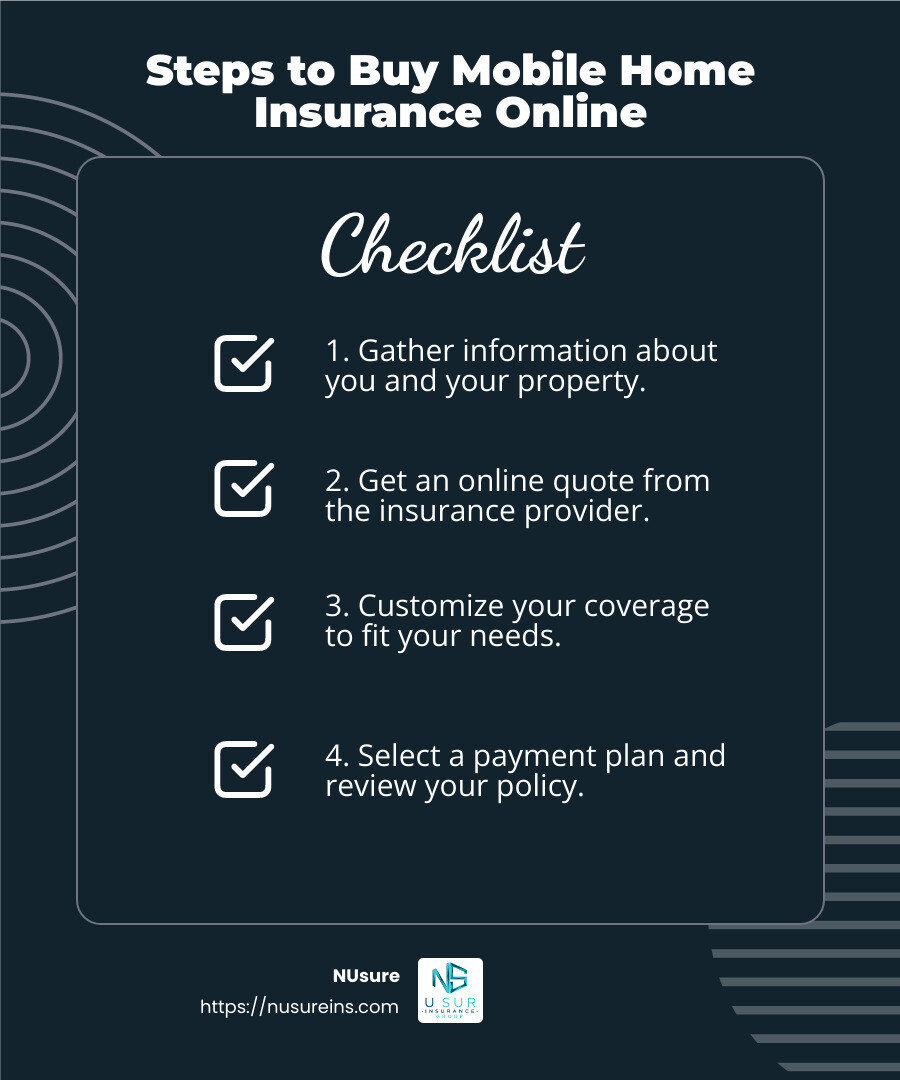
Buying mobile home insurance online is simple and convenient. Follow these steps to get the best coverage for your needs:
Steps to Buy Mobile Home Insurance Online
-
Gather Information: Collect basic details about you, your property, co-owners, and occupants. You’ll also need information about your home’s construction and safety features, as well as your mortgage status.
-
Get an Online Quote: Visit the insurance provider’s website to get a free online quote. This process usually takes just a few minutes. Input the collected information to get an accurate estimate.
-
Customize Your Coverage: Adjust the coverages to meet your needs. Standard policies often cover the dwelling, personal property, other structures, and liability. You can also add optional coverages for valuables like jewelry or collectibles.
-
Select a Payment Plan: Choose a payment plan that fits your budget. Many providers offer flexible options, such as monthly, quarterly, or annual payments.
-
Review and Purchase: Double-check the details and proceed to purchase the policy. You can often complete the transaction online or over the phone with an advisor.
Online Quote
Getting an online quote is the first step in buying mobile home insurance. It’s quick and easy. Most insurance companies provide a user-friendly interface where you can enter your information and get a quote almost instantly. This saves time compared to traditional methods, where you might have to wait days for a response.
Customization
One of the best parts of buying mobile home insurance online is the ability to customize your coverage. You can adjust the amounts for different coverages, like dwelling, personal property, and liability, to match your specific needs. Optional coverages can be added for additional protection.
For example, if you have valuable sports equipment, you can add extra coverage to ensure it’s protected.
Payment Plans
Flexibility in payment plans is another advantage of buying mobile home insurance online. You can choose a plan that fits your budget. Options often include monthly, quarterly, or annual payments. Some providers even offer discounts for paying in full upfront.
By following these steps, you can easily buy mobile home insurance online and ensure your home and belongings are protected.
Top Coverages to Consider
When you buy mobile home insurance online, understand the different coverages available. This helps you choose the best protection for your home and belongings. Here are the top coverages to consider:
Dwelling Coverage
Dwelling coverage protects the physical structure of your mobile home. This includes the walls, roof, and any attached structures, like a porch or deck. If your home is damaged by fire, wind, hail, or other covered perils, dwelling coverage helps pay for repairs or replacement.
Example: If a hailstorm damages your roof, dwelling coverage can cover the costs of repair or even replacement if needed.
Personal Property Coverage
Personal property coverage insures your belongings, such as furniture, electronics, and clothing. If these items are stolen or damaged by a covered peril, this coverage helps you replace them.
Example: If your laptop is stolen during a burglary, personal property coverage can reimburse you for its value, minus any deductible.
Other Structures Coverage
Other structures coverage applies to buildings not attached to your main home, like sheds, garages, or fences. This coverage ensures these structures are also protected against covered perils.
Example: If a windstorm knocks down your backyard fence, other structures coverage can pay for its repair or replacement.
Medical Payments and Liability Coverage
Medical payments coverage pays for minor medical expenses if someone is injured on your property, regardless of fault. This can help cover costs like doctor visits or minor treatments.
Liability coverage protects you if you are legally responsible for someone else’s injuries or property damage. This can include legal fees and settlements.
Example: If a visitor trips on your front steps and breaks their arm, medical payments coverage can handle their medical bills. If they decide to sue, liability coverage can help with legal costs.
Optional Coverages
In addition to standard coverages, you can add optional coverages for extra protection. These can be custom to your specific needs and provide additional peace of mind.
- Replacement Cost Coverage: This covers the full cost to replace damaged items without deducting for depreciation.
Example: If a fire destroys your ten-year-old mobile home, replacement cost coverage pays to rebuild it with materials of similar quality, up to the original purchase price.
- Trip Collision Coverage: This covers your mobile home while it’s being transported, protecting against damage from collisions.
Example: If your home is being moved and is damaged in a collision with another vehicle, trip collision coverage can pay for the repairs.
- Scheduled Personal Property: This provides extra coverage for high-value items like jewelry, collectibles, or expensive electronics.
Example: If you have a valuable piece of art, scheduling it on your policy ensures it’s fully covered if damaged or stolen.
By understanding and selecting these coverages, you can ensure your mobile home and belongings are well-protected. This makes it easier to find a policy that fits your specific needs when you buy mobile home insurance online.
Factors Affecting Mobile Home Insurance Rates
When you buy mobile home insurance online, several factors can impact your premium. Knowing these can help you find the best coverage at the most affordable price.
Age of Home
The age of your mobile home plays a big role in determining your insurance rate. Older homes are generally more expensive to insure because they may have outdated systems and materials that are more prone to damage.
Example: A 20-year-old mobile home is likely to have higher premiums than a newer model due to the increased risk of issues like outdated wiring or plumbing.
Condition
The overall condition of your mobile home also affects your insurance rates. Homes in good repair with updated systems and roofs are cheaper to insure.
Example: A well-maintained mobile home with a new roof and updated electrical system will likely get a lower rate compared to a home needing major repairs.
Location
Where your mobile home is located can significantly impact your insurance costs. Areas prone to severe weather like hurricanes, tornadoes, or floods generally have higher premiums. Similarly, the safety of your neighborhood and proximity to fire stations can also influence rates.
Example: A mobile home located in a coastal area prone to hurricanes will have higher insurance costs compared to one in a region with milder weather.
Coverage Limits
The amount of coverage you choose affects your premium. Higher coverage limits mean higher premiums but also more protection for your home and belongings.
Example: Opting for a higher coverage limit to fully protect your personal property will increase your premium but offer more financial security in the event of a loss.
Claims History
Your claims history can impact your insurance rates. If you have filed multiple claims in the past, insurers may view you as a higher risk, leading to higher premiums.
Example: If you’ve made several claims for storm damage or theft in the last few years, expect to pay more for your mobile home insurance.
Understanding these factors can help you make informed decisions when you buy mobile home insurance online. By considering the age, condition, location, coverage limits, and your claims history, you can find a policy that offers the best protection at a price that fits your budget.
Discounts Available for Mobile Home Insurance
When you buy mobile home insurance online, you can take advantage of several discounts to reduce your premiums. Here are some of the most common discounts available:
Age of Home Discount
The age of your home can qualify you for a discount. Newer mobile homes often benefit from lower premiums because they are built to more recent safety standards and are less likely to have issues.
Example: If your mobile home is less than five years old, you might receive a significant discount compared to older models.
Loss-Free Discount
If you haven’t made any insurance claims in recent years, you might qualify for a loss-free discount. Insurers view claim-free customers as lower risk, which can translate into savings.
Example: If you’ve gone several years without filing a claim, you could see a reduction in your insurance premium.
New Purchase Discount
Buying a new mobile home? Congratulations! You may be eligible for a new purchase discount. Insurers often offer this to new homeowners as an incentive.
Example: If you just bought a new mobile home and are insuring it for the first time, you might qualify for this discount.
Tie Down and Fully Skirted Discount
If your mobile home is tied down and fully skirted, you may qualify for a discount. These features make your home more stable and less susceptible to damage.
Example: A mobile home that is securely anchored and has a full skirt around its base is less likely to be damaged by high winds, which can lower your insurance premium.
By understanding and utilizing these discounts, you can make your mobile home insurance more affordable. When you buy mobile home insurance online, be sure to ask about these discounts to see how much you can save.
Frequently Asked Questions about Buying Mobile Home Insurance Online
What makes a mobile home uninsurable?
Several factors can make a mobile home uninsurable. Outdated wiring and plumbing are common issues. If your mobile home has old electrical systems or pipes, insurance companies may see it as a higher risk for fire or water damage.
Multiple claims also play a role. If your mobile home has a history of numerous insurance claims, insurers may decide it’s too risky to cover.
Why is it harder to insure a manufactured home?
Insuring a manufactured home can be more challenging for a few reasons. One big factor is whether the home has a permanent foundation. Homes not anchored to a permanent foundation are more susceptible to damage from wind and other natural elements.
Manufactured homes are also generally more susceptible to damage than traditional homes. Their build and materials can make them more vulnerable to issues like windstorms and falling objects.
What is covered by a mobile home policy?
A comprehensive mobile home insurance policy covers various types of damage and liabilities. Here’s a quick rundown:
- Fire: If your mobile home catches fire, insurance can cover the cost of repairs or replacement.
- Windstorm: Damage from high winds, such as those from a hurricane or tornado, is typically covered.
- Falling Objects: If a tree falls on your mobile home, your policy will usually cover the damage.
- Lightning: Strikes and resulting fires or power surges are often included.
- Explosion: Any damage from an explosion, whether from a gas leak or another cause, is generally covered.
By understanding these FAQs, you’ll be better prepared when you buy mobile home insurance online. Make sure to ask your insurer about these factors to ensure you get the coverage you need.
Next, let’s dive into how to buy mobile home insurance online, so you can get the protection you need quickly and easily.
Conclusion
Choosing the right mobile home insurance is crucial, and NUsure makes it simple and effective. With personalized policies custom to your unique needs, we ensure that you get the best coverage possible.
Personalized Policies
NUsure works with over 50 top-rated insurance carriers to provide customized policies that fit your lifestyle and budget. Whether you need coverage for your dwelling, personal property, or additional structures, we’ve got you covered.
Year-Round Monitoring
We offer year-round monitoring with our NUview service to ensure your policy remains the best fit for you. This means that as your needs change or new discounts become available, we’ll update your policy to keep you protected and save you money.
Save Time and Money
Our streamlined online process makes it easy to buy mobile home insurance online. Simply fill out one form, compare quotes from top carriers, and choose the best policy for you. Plus, with our commitment to finding you the best rates, you can save both time and money.
Ready to protect your home with a personalized insurance policy? Start your free quote now and find the NuSure difference today. Get peace of mind knowing your home is protected against the unexpected.
Thank you for choosing NUsure as your trusted insurance partner.