
Life Insurance Claims Management: Top 5 Powerful Success Tips 2025
Why Life Insurance Claims Management Matters More Than You Think
Life insurance claims management is the systematic process that ensures your beneficiaries receive their death benefits quickly and without unnecessary hassle during an already difficult time.
Key Components:
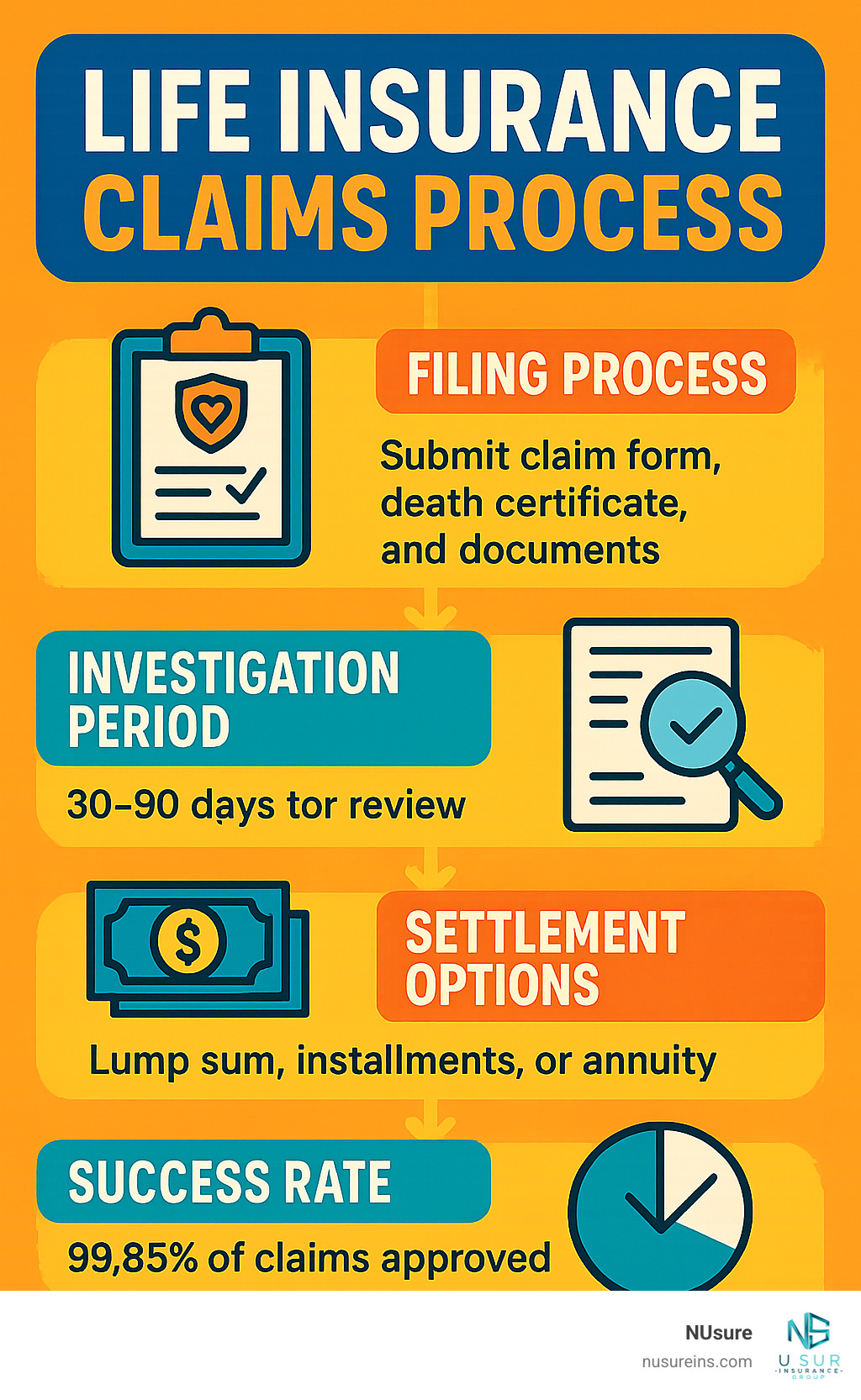
- Filing Process: Submit claim form, death certificate, and required documents
- Investigation Period: 30-90 days for review (depending on complexity)
- Settlement Options: Lump sum, installments, or annuity payments
- Success Rate: 99.85% of claims are approved (only 0.15% denied, mostly for fraud)
- Timeline: Most claims settled within 5 business days once documentation is complete
When someone you love passes away, the last thing you want is complicated paperwork or delayed payments. Yet poor claims experiences put up to $170 billion of global insurance premiums at risk by 2027.
The good news? Modern life insurance claims management has become dramatically more efficient. Companies like Sun Life now process most death claims within five business days, while Canada Life declined only 50 out of 33,000 claims in 2022.
I’m Michael J. Alvarez, CPRM, CPIA, a Property & Casualty risk and sales executive with experience in life insurance claims management across multiple markets.
Life insurance claims management terms made easy:
Why Life Insurance Claims Matter: Financial Security & Legal Foundations
When someone you love passes away, life insurance claims management becomes the lifeline that transforms a devastating financial situation into manageable stability. Most families depend on two incomes – when one person dies unexpectedly, that income disappears overnight.
The death benefit provides instant liquidity exactly when families need it most. Unlike retirement accounts or real estate that can take months to access, life insurance delivers cash quickly for mortgage payments, funeral costs, and daily expenses.
Latest research on claims experience reveals that poor claims handling could put up to $170 billion of global insurance premiums at risk by 2027. When insurance companies fail families during their darkest hours, trust in the entire system crumbles.
But here’s the encouraging news: life insurance claims management has dramatically improved. Modern insurers process most legitimate claims within days, not months.
The contestability period – typically two years after you buy your policy – protects both you and the insurance company. During this window, insurers can investigate claims thoroughly to prevent fraud. After two years pass, your claim becomes much more straightforward to process.
Fraud prevention matters more than you might think. Insurance fraud costs over $300 billion annually, and sophisticated criminals now use AI-generated documents and fake identities. The same technology that enables this fraud also powers advanced detection systems that protect honest policyholders.
To understand how these protections fit into the bigger picture, explore how life insurance works within this regulatory framework.
The Role of Regulations & Deadlines
Regulatory timelines exist to protect your family from unnecessary delays. The IRDAI requires insurers to settle claims within 30 days of receiving complete documentation, or within 90 days if additional investigation is needed.
In the United States, state insurance laws provide similar protections with standardized practices ensuring consistent treatment regardless of where you live. These regulations establish clear timelines, define exactly what documentation insurers can request, and outline step-by-step appeal processes.
Beneficiary rights are protected through multiple safety nets. State insurance departments offer free mediation services when disputes arise. Insurance companies must provide clear explanations for any claim denials and outline your appeal options.
The Life Insurance Claims Management Process: Step-By-Step

When someone you love passes away, knowing exactly what happens next can bring comfort during a confusing time. Life insurance claims management follows a clear path designed to get benefits to families as quickly as possible.
The journey begins with your First Notice of Loss (FNOL) – simply letting the insurance company know that the insured person has died. You can call, submit online, or have your insurance agent help. You just need the person’s name, when they died, and the policy number if available.
Next comes the claim form, which makes everything official. Each beneficiary needs to fill out their own form about their relationship to the deceased and preferred payment method.
The certified death certificate is your most important document. This official paper from the government proves the death happened and includes essential details. Get several copies – you’ll need them for more than just insurance.
During investigation and adjudication, the insurance company verifies the policy was active, premiums were paid, and reviews any special conditions. Most cases move through this step quickly. However, deaths within the first two years or involving unusual circumstances require closer review.
Finally, settlement and payout brings the process to a close. You can usually choose between getting all the money at once, receiving monthly payments, or setting up an annuity. Each choice has different tax effects.
For more details about how insurance companies handle these processes, check out More info about Insurance Policy Administration.
| Timeline Type | Standard Processing | Investigation Required |
|---|---|---|
| Simple Claims | 5-7 business days | 30 days maximum |
| Complex Claims | 30 days | 90 days maximum |
| Contested Claims | 60 days | Extended as needed |
| Appeal Process | 30-60 days | Varies by state |
Life Insurance Claims Management Timeline
Most claims move faster than you might expect. Sun Life processes most death claims within five business days once they have all the paperwork. Canada Life declined only 50 out of 33,000 life insurance claims in 2022 – just 0.15% of all claims.
The 30-60 day norm applies to more complicated cases. While straightforward claims with complete paperwork zip through the system, cases needing investigation naturally take longer. Deaths within the two-year contestability period require more thorough review.
Required Documents & Forms
Getting your paperwork right from the start makes everything smoother. Your death certificate needs to be certified, not just a photocopy. The claim form must be completely filled out by each beneficiary. You’ll need the original policy or policy number, plus photo ID for everyone receiving benefits.
Special situations require extra paperwork. If benefits go to an estate or trust, bring court documents. Minor children need legal guardianship papers. Don’t forget about rider documentation for accidental death benefits, disability waivers, or other special coverage.
Life Insurance Claims Management Checklist
Right away, contact the insurance company to report the death. Order several certified death certificates. Find the policy document and write down the policy number. Make a list of all beneficiaries.
Within the first week, complete claim forms carefully. Gather all supporting documents and make copies before sending originals. Submit your complete package using the insurance company’s preferred method.
Stay on top of things by checking claim status regularly. Answer requests for additional information quickly. Keep notes about every phone call and save every email.
For more information about how automation tools are streamlining claims, visit More info about Life Insurance Automation Tools.
Avoiding Delays, Denials & Disputes

Life insurance claims management has become incredibly reliable – only about 0.02% of claims get denied. But knowing what can go wrong helps you avoid these rare pitfalls entirely.
Misrepresentation during the application process causes most legitimate denials. This happens when someone doesn’t tell the whole truth about their health, smoking habits, or risky hobbies. Insurance companies need accurate information to price policies fairly. If you have health issues, be upfront – you’ll still likely get coverage at the right price.
The suicide clause affects new policies during their first two years. Most policies won’t pay out for suicide during this period, though rules vary by state. After two years, even these tragic situations are typically covered.
Unpaid premiums create the most avoidable problem. If premiums aren’t current, your policy might have lapsed without you realizing it. Setting up automatic payments solves this problem completely.
Excluded activities include deaths from illegal activities, non-commercial aviation accidents, certain foreign travel situations, or war-related incidents. Your policy documents spell out these exclusions clearly.
Fraud red flags can trigger investigations even for legitimate claims. These include recent policy purchases, multiple policies bought quickly, or unusual death circumstances. If your claim gets flagged, don’t panic – investigations protect everyone and legitimate claims still get paid.
When problems arise, you have several appeal options. Start with the insurer’s internal review process, then escalate to your state insurance department if needed. For an in-depth look at investigations, you can better understand what investigators actually look for.
For more information about different policy types and their coverage details, check out More info about Life Insurance Policies.
Contestability Period Essentials
The two-year contestability window represents the most important timeframe in life insurance claims management. During these first two years, insurers can investigate claims more thoroughly and potentially deny coverage for serious mistakes on your original application.
Application accuracy becomes absolutely critical during this period. Every question deserves a complete, honest answer. Share your full medical history, be truthful about smoking, and disclose any risky hobbies or travel plans.
After those two years pass, claims become much simpler. Insurers can still investigate obvious fraud, but they can’t nitpick your original application anymore.
How to Appeal a Denied Claim
Internal review gives you your first chance to overturn a denied claim. Every insurance company must provide a clear appeals process where different people review your case.
Additional evidence often makes the difference in successful appeals. This might include independent medical examinations, expert witnesses, or simply locating documents that weren’t available during the initial review.
State insurance departments provide free mediation services where a neutral third party helps you and the insurance company reach an agreement. Attorney involvement becomes necessary when insurance companies act in bad faith or when cases involve complex legal issues.
Technology & Best Practices Revolutionizing Claims Management

The world of life insurance claims management has changed dramatically. What used to feel like navigating a maze blindfolded now happens with the speed and clarity that grieving families deserve.
Claims management software platforms like FINEOS now power operations for over 50 insurance organizations worldwide, including 7 of the top 10 group life and health carriers in the US. These intelligent systems check your policy status, verify documentation, and route your case to the right specialist automatically.
AI triage works like a smart traffic controller for claims. Simple cases with complete paperwork zoom through straight-through processing – no human intervention needed. Your claim gets approved and processed within hours. Meanwhile, complex cases requiring investigation get immediate attention from experienced specialists.
Predictive fraud scoring uses machine learning algorithms to analyze patterns against historical data, quickly identifying suspicious claims while fast-tracking legitimate ones. This means honest families get their benefits faster while the system stays protected.
Chatbot updates keep you informed without phone tag. Instead of wondering what’s happening, you receive automatic notifications about processing milestones, required documents, and expected timelines.
The Download FINEOS Claims datasheet reveals how comprehensive these modern platforms have become.
For more information about these technological advances, check out More info about Life Insurance Policy Management Software.
Modern Tools for Faster Settlements
Cloud platforms have revolutionized how life insurance claims management works behind the scenes. These systems offer true accessibility and collaboration – your claims representative can access your file from anywhere and provide consistent service.
Integration APIs solve real problems by linking different systems seamlessly. Your claims platform now connects directly with policy administration systems for instant coverage verification, payment systems for immediate benefit disbursement, and government databases for death certificate verification.
Electronic signatures eliminate frustrating bottlenecks in traditional claims processing. You can complete and submit claim forms digitally, with built-in validation that catches errors before submission.
Building a Customer-First Claims Culture
Technology is only half the story. The best life insurance claims management combines smart systems with genuinely caring people who understand what you’re going through.
Proactive communication has become the new standard. You receive immediate acknowledgment when your claim is received, regular status updates throughout processing, and clear explanations if any delays occur.
Empathy training for claims representatives recognizes that every claim represents a family dealing with loss. Modern training focuses on active listening skills, appropriate language for sensitive situations, and cultural sensitivity.
KPI tracking measures what actually matters to families. Instead of just tracking internal efficiency, insurers now monitor first call resolution rates, customer satisfaction scores, and complaint resolution times.
Preparing Beneficiaries & Policyholders for Success

The most successful life insurance claims management experiences happen when families prepare well in advance. Think of it like leaving a roadmap for your loved ones during one of the most difficult times of their lives.
Keeping your policy accessible means more than just having it somewhere safe. Store your original policy documents in a fireproof safe or safety deposit box, but make sure trusted family members know the location and have access.
Updating beneficiaries regularly prevents countless headaches. Life changes quickly – marriages, divorces, births, deaths, and major life transitions all affect who should receive your benefits. Review your beneficiary designations after major life events like getting married, having children, getting divorced, or when a named beneficiary passes away.
Automating your premium payments eliminates one of the most preventable causes of claim problems. Set up automatic payments from your bank account so your coverage stays in force even if you forget a payment date.
Communication with your beneficiaries doesn’t have to be complicated. Simply let them know the coverage exists, where to find the policy documents, and who to contact when the time comes. Consider sharing your insurance agent’s contact information.
When it comes to payout options, help your beneficiaries understand their choices ahead of time. They can typically choose a lump sum payment for immediate access, installment payments spread over time, or an annuity that provides lifetime income. Each option has different tax implications.
Advance Preparation Checklist
Document safekeeping requires balancing security with accessibility. Keep original policies in a fireproof safe or safety deposit box, but maintain copies in a separate location that family members can access easily.
Digital copies provide excellent backup security. Scan all your policy documents, riders, and amendments, then store these files in password-protected cloud storage. Share the access credentials with trusted individuals.
Sharing advisor contact information with your beneficiaries creates a support network. Provide contact details for your insurance agent, financial advisor, estate planning attorney, and accountant.
Tax consultation planning prevents unpleasant surprises. Different payout options have different income tax implications, and large policies might trigger estate tax consequences. Understanding these issues beforehand helps your beneficiaries make informed decisions.
A little preparation now can save your family months of complications later, allowing life insurance claims management to work as smoothly as it was designed to.
Frequently Asked Questions about Life Insurance Claims
How long does it take to receive the death benefit?
Most life insurance claims management systems now process death benefits within 5-7 business days once all paperwork is complete. Sun Life reports that most claims are settled within five business days when everything is in order.
Complete documentation makes all the difference in processing speed. When families submit the death certificate, claim forms, and identification documents together, claims move through the system smoothly.
The two-year contestability period affects timing significantly. Deaths occurring after this period typically process faster since insurers have fewer reasons to investigate.
Regulatory timelines provide important protections. Under IRDAI regulations, insurers must settle claims within 30 days of receiving complete documentation, or within 90 days if investigation is needed.
What if my life insurance claim is denied?
Claim denials are incredibly rare – only about 0.02% of life insurance payouts get denied, which means 99.98% of legitimate claims are approved.
Understanding why represents the first step. Insurance companies must provide detailed written explanations for denials. Common reasons include misrepresentation on the original application, unpaid premiums that caused policy lapses, or deaths from excluded activities.
The appeal process gives families multiple paths forward. Internal appeals through the insurance company often resolve issues when additional documentation addresses their concerns.
State insurance departments provide free assistance when internal appeals don’t work. Legal representation becomes valuable for complex cases or when insurers act in bad faith.
Which payout option—lump sum, installments, or annuity—is best?
Lump sum payments provide immediate access to the full death benefit with maximum flexibility. Most beneficiaries choose this option because it’s simple and provides complete control over the funds.
Installment payments spread the death benefit over a specified period, providing regular income. This works well for families who want guaranteed payments but worry about managing a large sum all at once.
Annuity payments provide lifetime income, ensuring beneficiaries never outlive the money. This particularly benefits surviving spouses who need long-term financial security.
Tax implications vary by payout method. Lump sums are generally tax-free to beneficiaries, while installment and annuity payments may include taxable interest. Most financial advisors recommend discussing this decision with tax professionals before deciding.
Conclusion
When someone you love passes away, the last thing you want to worry about is fighting for the financial protection they worked so hard to provide. Thankfully, modern life insurance claims management has transformed into something families can actually count on during their darkest hours.
The numbers tell an encouraging story. With 99.85% of claims approved and most settlements happening within just a few business days, the system actually works for families who understand what to expect.
Technology has changed everything. AI systems now spot fraud instantly while fast-tracking legitimate claims. Digital platforms let you submit documents from your phone. What used to take months now happens in days.
But preparation still matters most. The families who sail through claims processing are the ones who kept their beneficiary information current, stored their policies where people could find them, and made sure premiums stayed paid automatically.
The future looks even brighter. As digital innovation continues, we’re seeing faster processing, clearer communication, and more personalized support for grieving families. Insurance companies finally understand that treating people with compassion during loss isn’t just the right thing to do – it’s good business.
At NUsure, we’ve built our insurance marketplace around connecting you with over 50 top-rated carriers who understand these principles. While we focus primarily on homeowner’s insurance, our expertise in insurance operations and year-round policy monitoring applies across all coverage types.
Life insurance claims management doesn’t have to be the nightmare people fear. With proper preparation, honest communication, and a basic understanding of how the process works, your beneficiaries can steer claims successfully. The financial security you’re working to provide will actually reach the people you love most.
For more information about policy management tools that can help streamline your insurance experience, visit More info about Life Insurance Policy Management Software.